

When testing small single-point LiDAR modules in controlled settings, indoor performance gives a clear picture of how they measure object distance with repeatable results. The TF mini lidar is one such module used widely in robotics, obstacle sensing, and automation platforms. Understanding how this sensor performs indoors helps hobbyists and developers judge whether its measurements are consistent and suitable before advancing to more complex environments. In this review, we take a closer look at the sensing characteristics of the Benewake TFmini-S, a compact Benewake LiDAR sensor that brings accurate range data to lightweight applications.
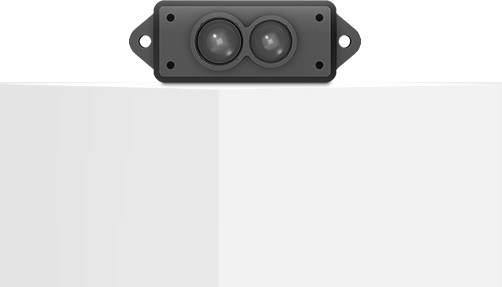
What Makes TFmini-S Suited for Indoor Tests
The Benewake TFmini-S is designed to detect objects between 0.1 and 12 meters with a resolution down to 1 cm under typical indoor lighting and conditions. Its ranging performance is less influenced by ambient indoor reflectivity, meaning that a whiteboard or similar test surface yields consistent readings across repeated trials. The sensor’s accuracy is around ±6 cm for short ranges up to 6 m and about ±1 percent for longer distances from 6 to 12 m when measured against known targets in an indoor space. These characteristics offer adequate precision for many interactive projects and proximity sensing tasks.
Engineers and developers monitoring repeatability in indoor tests often record data at a default frame rate such as 100 Hz. In these tests, small fluctuations on the scale of a few centimeters are seen as the sensor adapts to slight changes in target reflectivity or geometry. Explained simply, a minimal standard deviation in measured values indicates that readings converge around a stable distance value when you place a consistent object at a fixed spot. High frame rates further help in obtaining smooth distance curves during brief movements.
Practical Insights From Indoor Measurements
In setups where lighting is stable and reflective surfaces are used, the TF mini LiDAR module demonstrates reliable performance. These tests also reflect how the underlying time-of-flight method reduces noise by timing laser pulses reflecting back from a surface. For indoor robotics or automation prototypes, this means more dependable trigger distances or obstacle data without contending with strong sunlight or complex backgrounds.
The compact size and low power needs of the Benewake LiDAR sensor make it an appealing choice for embedded systems where real-time distance data supports decision-making logic.
Conclusion
Testing the Benewake TFmini-S indoors shows that its distance measurements hold up well across controlled distances and lighting scenarios. With a combination of decent accuracy and repeatable results, this sensor is worth considering for indoor sensing tasks in robotics, automation, and hobby projects.
If you’re evaluating a TFmini lidar for your next build, explore how the Benewake TFmini-S fits your project’s accuracy needs and reach out to learn integration options today.